Perhaps your car needed a new exhaust and the garage gave you the old catalytic converter. Perhaps you replaced it yourself, or found one in a garage clearance. Either way, you now have a single used catalytic converter and want to sell it without being underpaid or taking unnecessary risks.
This guide explains how an individual in Belgium, France, the Netherlands or Germany can sell one catalytic converter safely to a specialist buyer such as RK-Baron.
Why a single converter can be worth selling
A catalytic converter is a specific part with its own reference. Even one unit may be worth more than its weight in scrap steel. The price depends on the exact reference of the part, its condition and the market of the day.
Send us the code and RK-Baron values the unit by its exact reference.
Step 1: Identify your converter
Find the stamped code
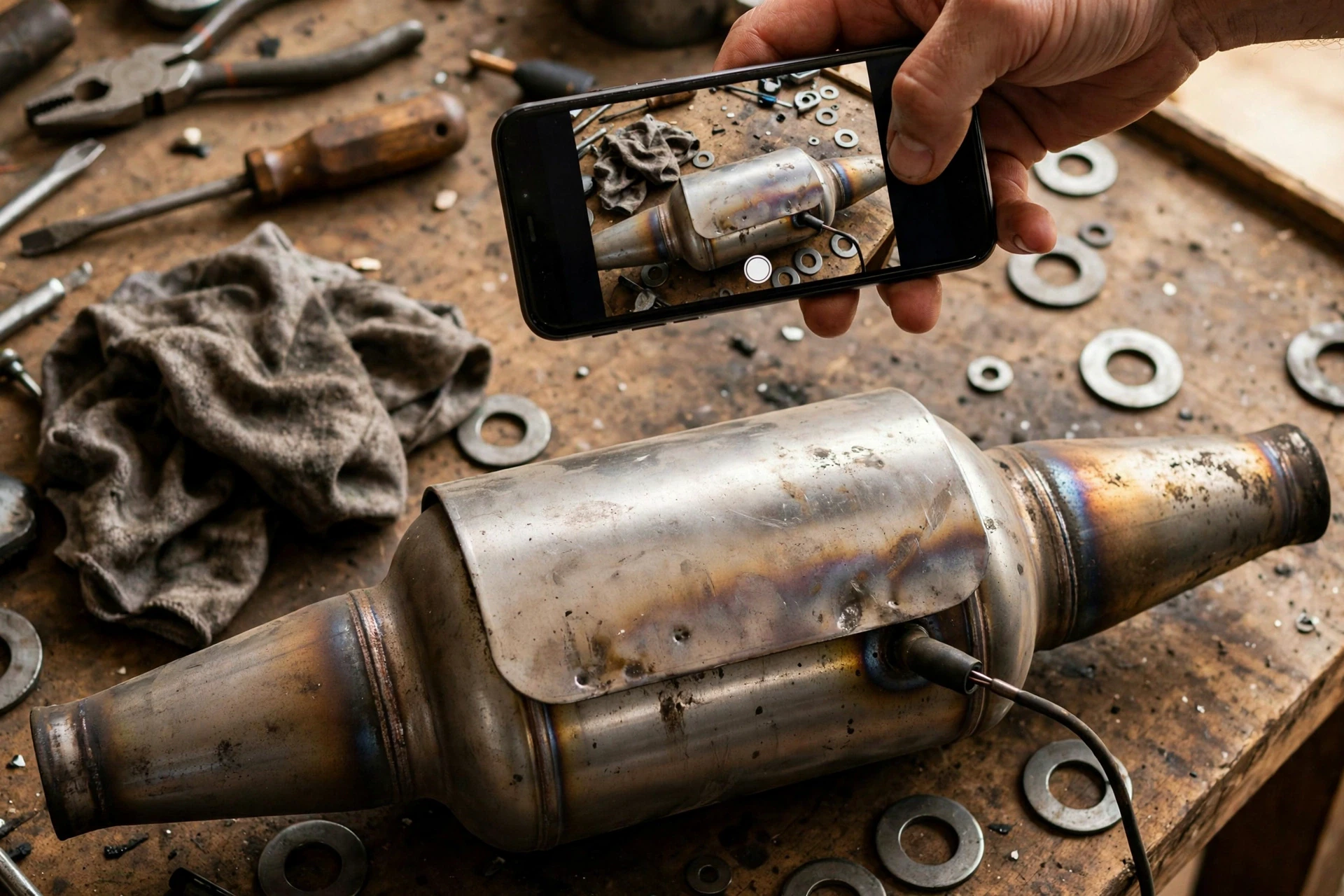
Most original catalytic converters carry a code stamped or engraved on the metal shell. It may be a series of letters and numbers, sometimes with the manufacturer's logo. This code is the key to an accurate valuation.
Photograph it clearly
Clean the area, use side lighting and take several photos so the characters are readable. Include the whole stamp in the frame. If you cannot find the code, take photos of the complete converter from several angles.
Note the vehicle
If you know which car the converter came from, note the make, model and engine. This helps when the stamp is worn.
Step 2: Get a valuation
Send your photos to RK-Baron on WhatsApp or through the quote form. You will receive an indicative price based on the reference and the market of the day.
Keep in mind:
- the price is linked to the date, because the market moves
- an aftermarket converter is usually priced lower than an original one
- a converter with a missing or broken interior is valued differently
- the final price is confirmed when the unit is received and checked
Step 3: Avoid common pitfalls
Do not cut it open
Opening the shell to look inside can damage the substrate and lose fragments that are part of the converter. Keep the converter whole.
Be cautious with unrealistic offers
An offer that seems far higher than others, with vague conditions, deserves caution. Ask how the price was calculated and what happens if the unit is different from expected.
Avoid informal deals
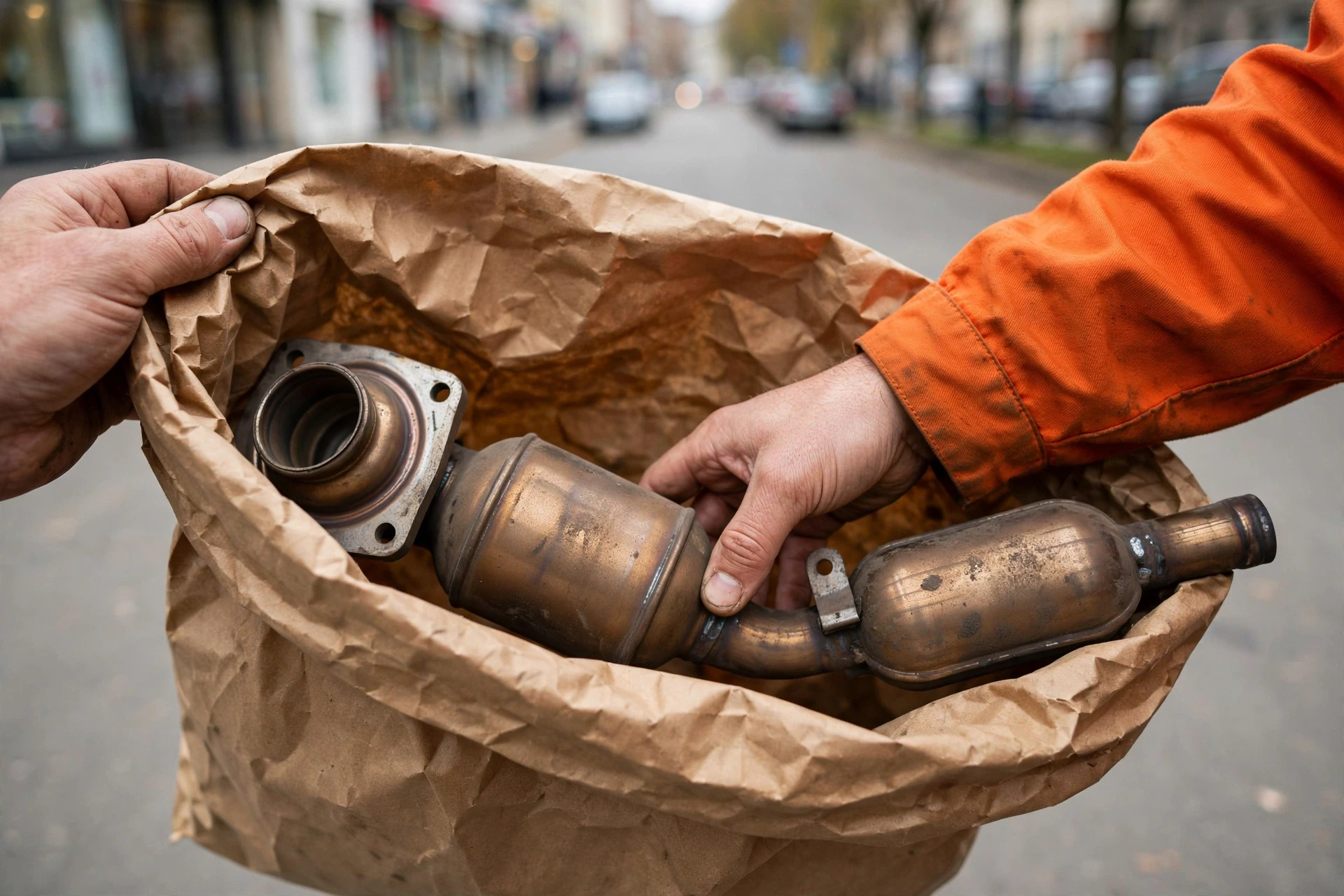
Meeting a stranger in a car park to hand over a converter is risky for you and leaves no record of the sale. A buyer who documents each purchase and pays by a traceable method gives you a clear trace.
Keep proof of origin
If you have a garage invoice showing the replacement, keep it. Responsible buyers ask about the origin of converters, and a document makes the answer simple.
Step 4: Hand over the converter
Once you accept the offer, RK-Baron explains how to send or hand over the converter. Depending on your location in Belgium or elsewhere in Europe, options may include drop-off or a grouped pickup.
Pack the unit so it does not rattle and lose ceramic fragments. A sturdy box with padding is usually enough. Label it with your name and the reference you received.
Step 5: Receive payment
After the converter has been received and checked, payment is made on the terms agreed with you. If the unit matches the photos, the confirmed price follows the reference and the market at the time of valuation. If there is a difference, RK-Baron explains it before payment.
Why buyers ask questions
Catalytic converter theft is a real problem in many European countries. A serious buyer will ask you some simple questions about where the part comes from. This is not a sign of mistrust. It protects honest sellers and makes stolen parts harder to sell.
Typical questions include:
- how you obtained the converter
- which vehicle it came from
- whether you have an invoice or work order
A safe and simple sale
Selling one catalytic converter does not need to be complicated. Identify it, photograph the code, receive a clear offer from RK-Baron and get paid on the terms agreed with you. Send the code or a photo on WhatsApp or through the quote form, and RK-Baron will reply with an indicative valuation.