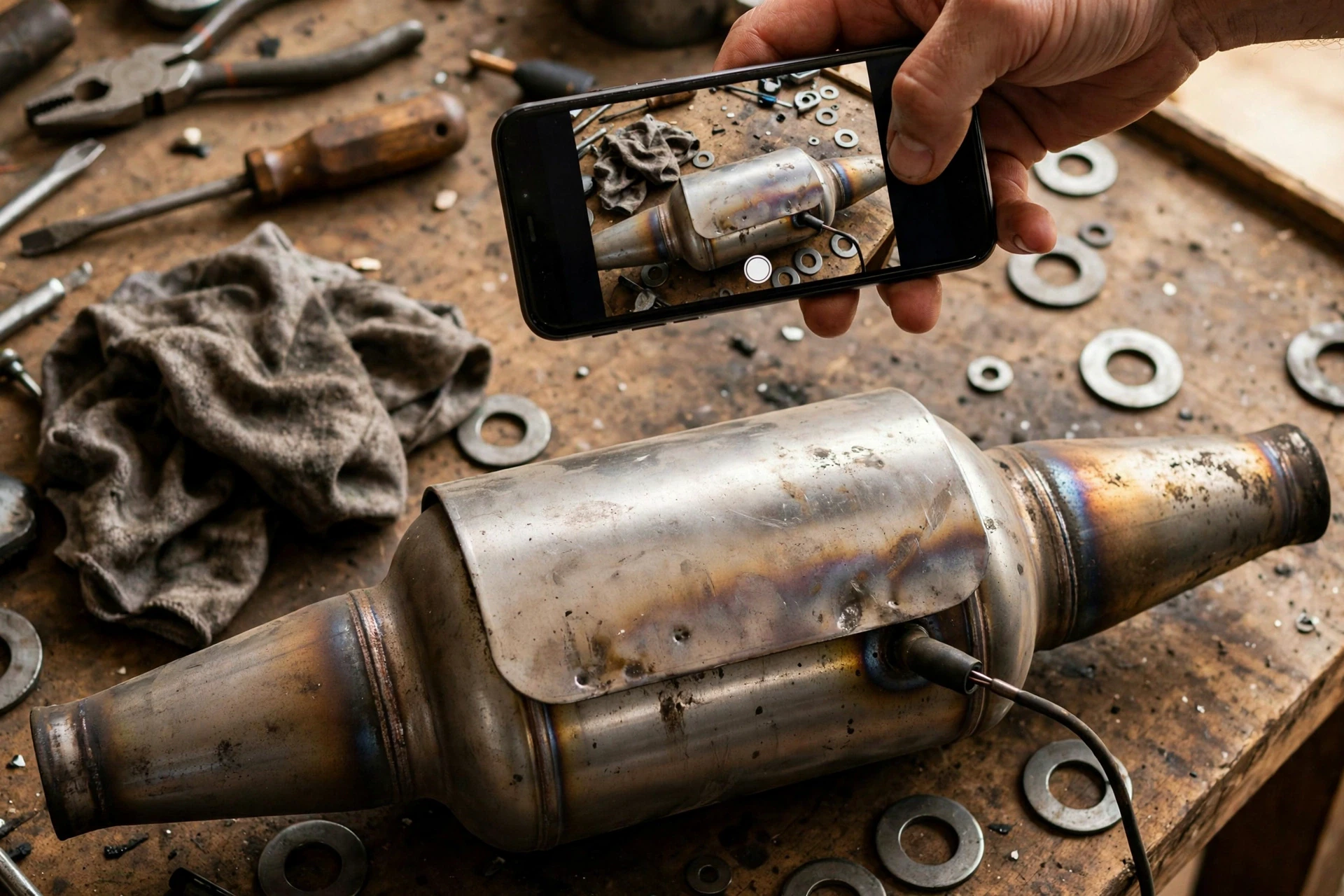
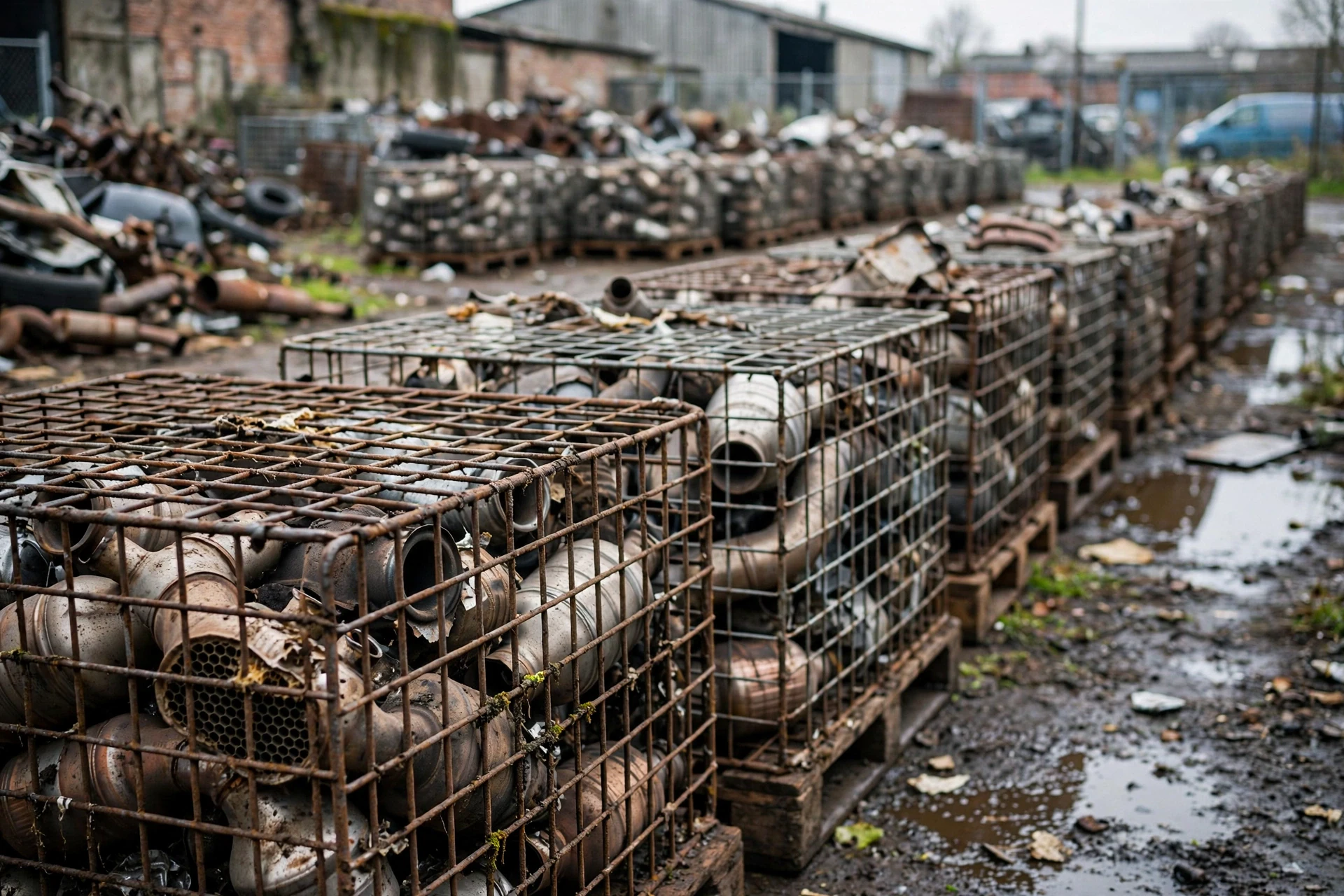
Scrapyards often accumulate catalytic converters faster than anyone else. Cars arrive, units are cut off, and before long there are several crates or big bags of converters of every shape and condition. Selling them as one undifferentiated pile is simple, but it rarely reflects their real value.
This guide explains how a scrapyard in Belgium, France, the Netherlands or Germany can sort, weigh and prepare bulk catalytic converter lots so that the sale to RK-Baron is fast and transparent.
Why sorting changes the outcome
Not all catalytic converters are equal. Prices differ widely from one reference to another. Some are intact, others have lost part of their monolith. When everything is mixed, the buyer has to assume an average, and good units end up priced like weaker ones.
Sorting allows each category to be valued on its own terms. It also reduces discussion when the lot is checked on arrival.
A simple sorting scheme
You do not need special equipment to sort well. A few clear categories are enough for most yards:
- Ceramic units with readable codes: intact converters whose stamp can be photographed.
- Ceramic units without readable codes: intact but with rusted or missing stamps.
- Metallic substrate units: recognisable by the metal foil inside instead of a honeycomb ceramic.
- Diesel particulate filters (DPF / FAP): often larger, with a different structure and a different valuation logic.
- Damaged or loose monoliths: broken ceramic, partly empty shells, crushed material.
- Aftermarket units: replacement parts, which are generally priced lower than original equipment.
Keep ceramic dust and fragments
Broken ceramic fragments and dust from damaged units are still part of the converter. Collect them in a closed container instead of sweeping them away. They can be added to a crushed material lot.
Weighing and recording
Weigh each category separately
A reliable scale and a simple sheet or spreadsheet are enough. Record for each container:
- the category
- the gross weight and the container weight
- the number of units, when countable
- the date and any useful notes
These figures help you match our check on arrival.
Photograph before shipping
Photos of each container, and of the stamped codes when available, create a shared reference. If questions arise later, both sides can refer to the same images.
Getting a valuation from RK-Baron
Coded units
For intact converters with readable stamps, send photos of the codes. Each unit is valued according to its exact reference, its condition and the market of the day. For large quantities, a list or a series of clear photos per container works well.
Bulk and crushed material
For units without codes, decanned monoliths and crushed material, each category is valued as a whole. Photos of the containers and the recorded weights give a first indication, and the material is weighed and checked on arrival. The price then depends on the type of material, its condition and the market of the day.
Indicative versus final price
Because the market changes daily, the first price you receive is indicative. The final figure is confirmed after the lot has been received, weighed and checked.
Pickup logistics
Bulk lots from scrapyards are usually too heavy to deliver by car. RK-Baron arranges pickup according to your location and volume. To make collection smooth:
- group containers near the loading area
- use pallets, crates or closed big bags suited to a forklift
- keep the weight sheet ready for the driver
- separate any material that is not part of the sale
A clear handover reduces loading time and avoids confusion about which containers belong to the lot.
Payment
After weighing and checking, payment is made on the terms agreed with you. You receive a written breakdown of the categories, weights and prices so that the sale can be booked properly.
Good habits for regular sellers
Yards that sell frequently benefit from a fixed routine:
- sort at the moment of removal, not months later
- label containers clearly by category
- store material under cover to limit rust on stamps
- request a valuation when containers are full, rather than waiting for a peak
Regular, smaller sales also limit the amount of valuable material stored on site.
Ready to sell your next lot?
Whether you have a few crates or a full truck, start by sending photos of the codes or of the sorted containers on WhatsApp or through the quote form. RK-Baron will reply with an indicative valuation and pickup options for your scrapyard.