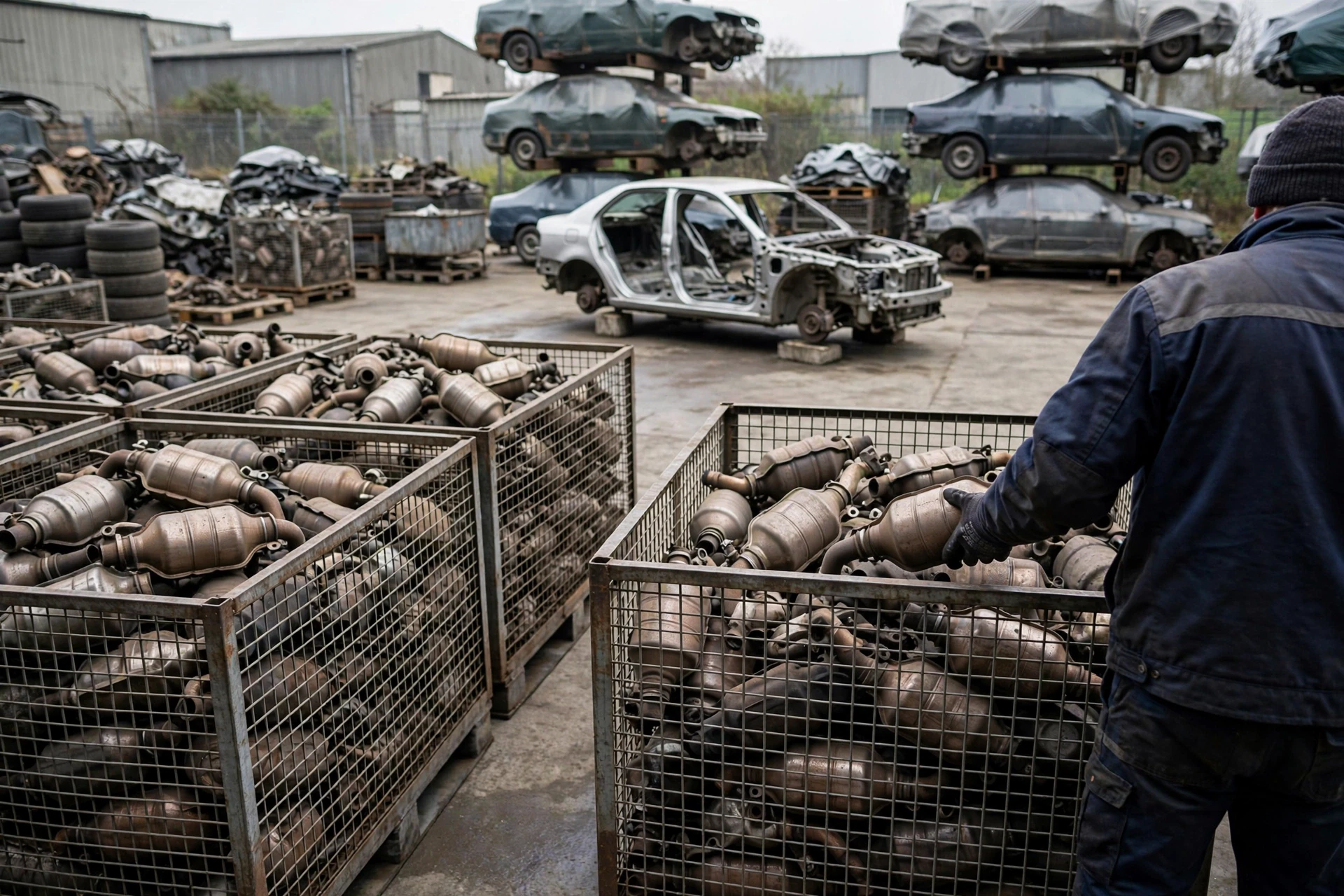
Every scrapyard and dismantler knows the situation: catalytic converters come off vehicles week after week and end up in a corner of the yard, mixed, wet and hard to count. When pickup day comes, time is lost sorting, searching for codes and agreeing on what belongs to the lot.
This guide explains how to prepare and store catalytic converters so that the handover to RK-Baron is quick, clear and calm for everyone.
Why preparation matters
A well prepared lot is easier to describe, easier to check and easier to load. It also gives the buyer the information needed to make an accurate offer, because each part can be identified by its reference and its condition.
Preparation does not require special equipment. It is mostly a question of habits applied from the moment a unit is removed.
Keep every unit whole
Do not open the shell
Leave each catalytic converter as it came off the vehicle. Do not cut the shell, do not knock out the monolith and do not empty the contents. An opened unit loses its identity and becomes harder to describe.
Keep the stamped code visible and clean
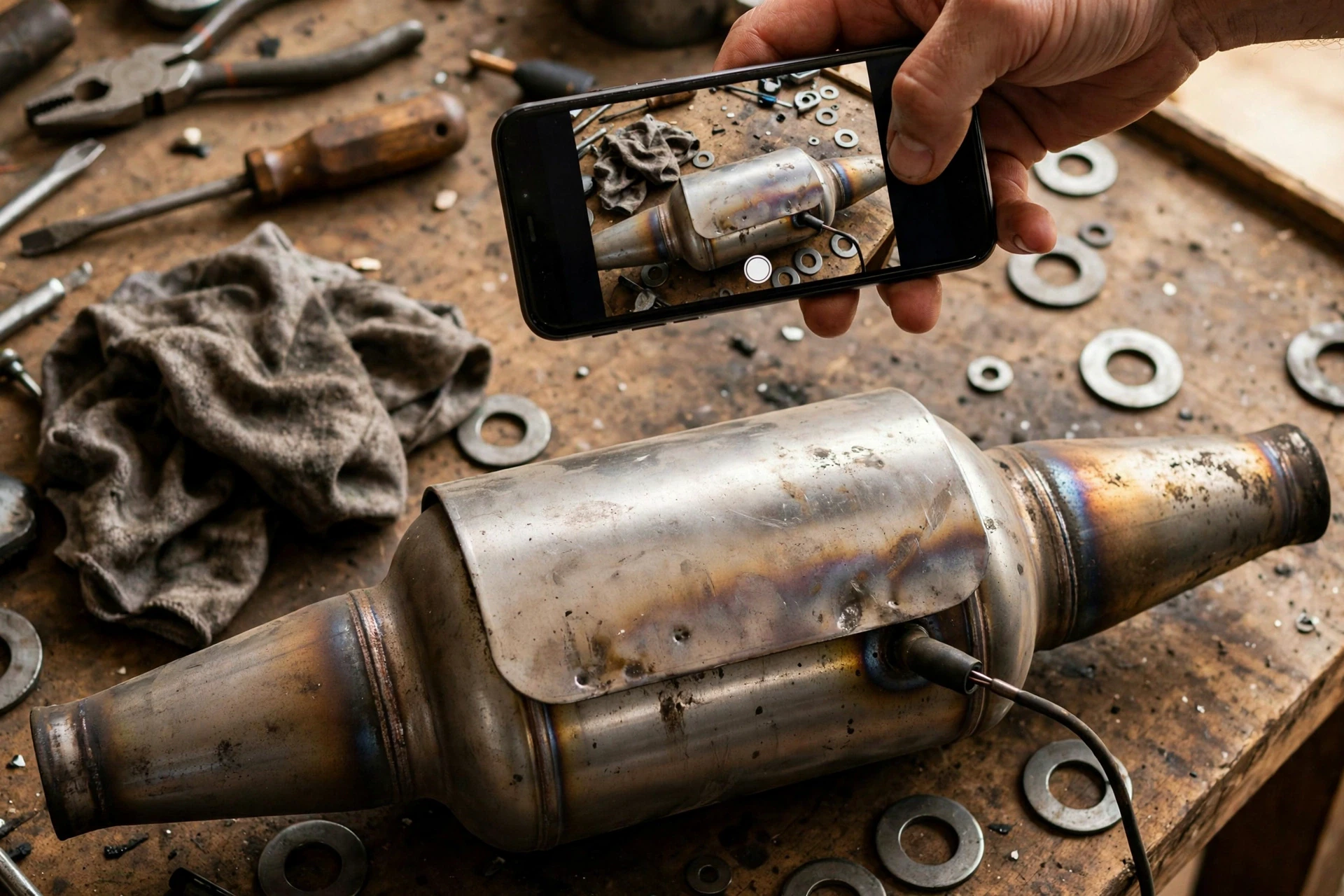
The stamped code on the shell is the most useful piece of information for identifying a part. Brush off loose dirt and rust around the stamp, without grinding or sanding it away. If a heat shield hides the code, note it so that it can be checked later.
Sort before you store
A few simple categories are enough for most yards:
- Whole catalytic converters with a readable code
- Whole catalytic converters without a readable code
- DPF/FAP filters, kept apart from catalytic converters
- Broken or crushed material, including units with a damaged or loose monolith
Keep whole units and broken material in different containers. Mixing them makes counting harder and slows down the check on pickup day.
Store the lot properly
Keep it dry and covered
Store catalytic converters under a roof or in closed containers. Rain and standing water speed up rust on the stamps and make codes harder to read.
Use containers that are easy to move
Crates, pallet boxes or closed big bags work well, as long as they can be handled by a forklift or a pallet truck. Label each container with its category.
Count and photograph the lot
Count per category
Keep a simple sheet per container with the category, the number of units and the date. These figures help you describe the lot and match it with our check on pickup day.
Take clear photos
Photograph each container, and the stamped codes of the whole units where possible. Good photos allow RK-Baron to prepare an indicative offer before arrival and give both sides a shared reference.
What to have ready on pickup day
- containers grouped near the loading area
- the count sheet for each category
- your company details for the documents of the sale
- a clear separation of any material that is not part of the lot
Payment is made on the terms agreed with you. You receive a written overview of what was collected.
Safe handling
Catalytic converters can have sharp edges, and broken material produces dust. Wear gloves and safety glasses when handling units, and use closed containers for broken or crushed material. Lift heavy containers with suitable equipment rather than by hand, and keep walkways around the storage area clear.
Ready for your next pickup?
When your containers are sorted and counted, send photos of the codes or of the containers on WhatsApp or through the quote form. RK-Baron will reply with an indicative offer and pickup options for your yard.