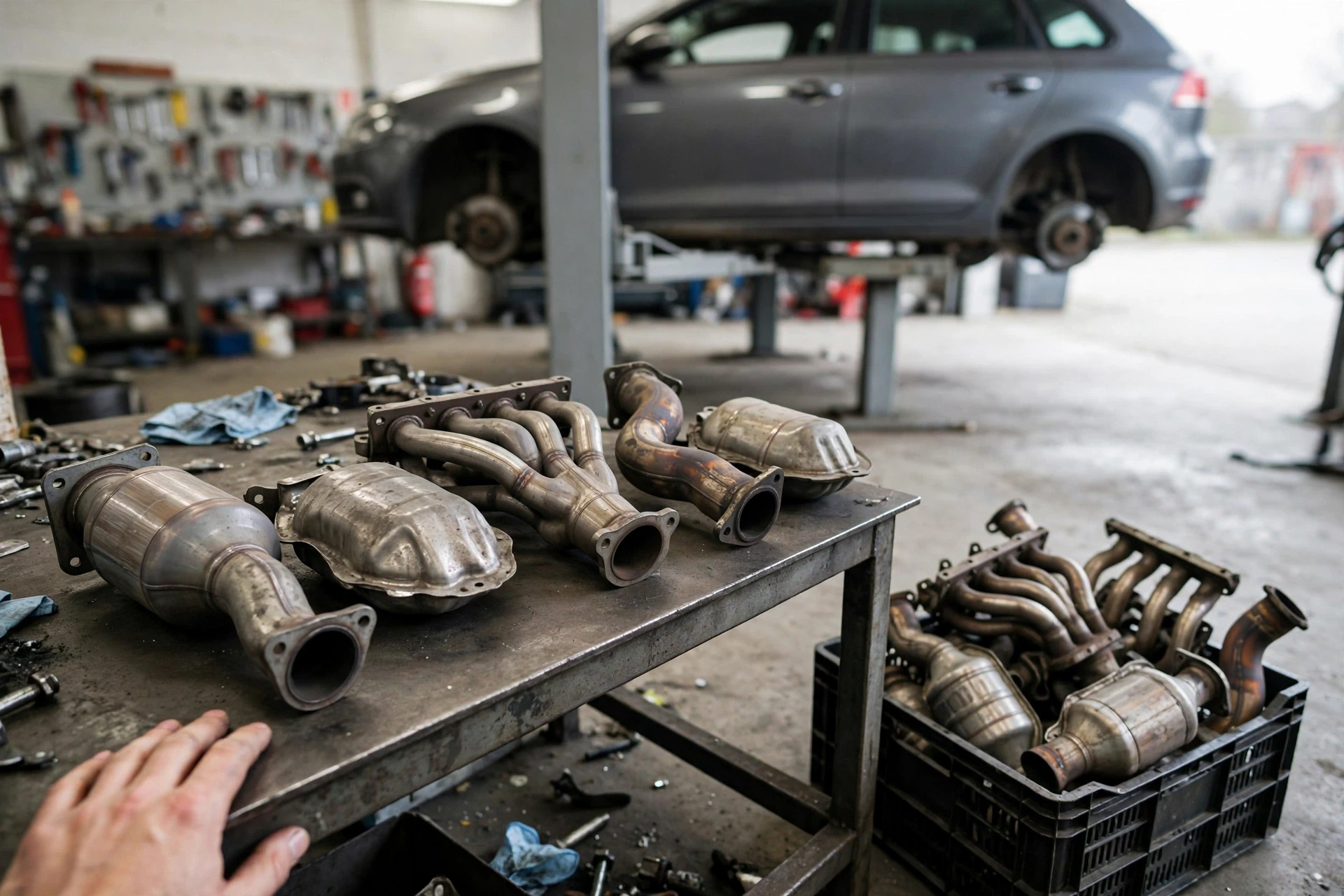
Every workshop that replaces exhaust parts ends up with old catalytic converters stacked in a corner. Many garages treat them as scrap and hand them over for whatever the general metal buyer offers. That is a missed opportunity. A used catalytic converter is a specific part with its own reference, and when it is identified and sold correctly, it becomes a real line of revenue for the business.
This guide explains how a garage in Belgium, France, the Netherlands or Germany can organise the flow of replaced units and sell them to a specialist buyer such as RK-Baron.
Why replaced catalytic converters have value
A catalytic converter is not just a steel can. It is a specific part, made for a given range of vehicles, with a ceramic or metallic substrate inside the shell. Prices on this market change daily.
The price of a single unit depends on:
- the exact reference of the converter
- whether it is an original or an aftermarket part
- whether the internal substrate is complete, cracked or partly missing
- the market of the day
Send us the code of each unit and RK-Baron replies with a clear offer based on the exact reference and its condition.
Organise the flow inside the workshop
Keep units whole and labelled
When a mechanic removes a converter, the simplest habit is to keep it intact. Do not cut the shell open and do not knock out the substrate. A complete unit with its stamped code visible is the easiest to identify.
A small tag or marker note with the vehicle make and model can also help later, especially when the stamp is worn.
Set up a dedicated storage area
Choose a dry place, away from the main work bays. Pallets or strong crates work well. Separating units by type makes valuation faster:
- ceramic catalytic converters from petrol and diesel vehicles
- metallic substrate units, often from sports or older models
- diesel particulate filters (DPF / FAP)
- damaged units with a broken or loose monolith
Avoid mixing with other scrap
Exhaust pipes, silencers and brackets have little value compared with the converter itself. If they stay attached, the buyer must remove them, and that adds handling. Detaching unneeded pipe sections where practical keeps the lot clean.
Get a valuation without moving anything
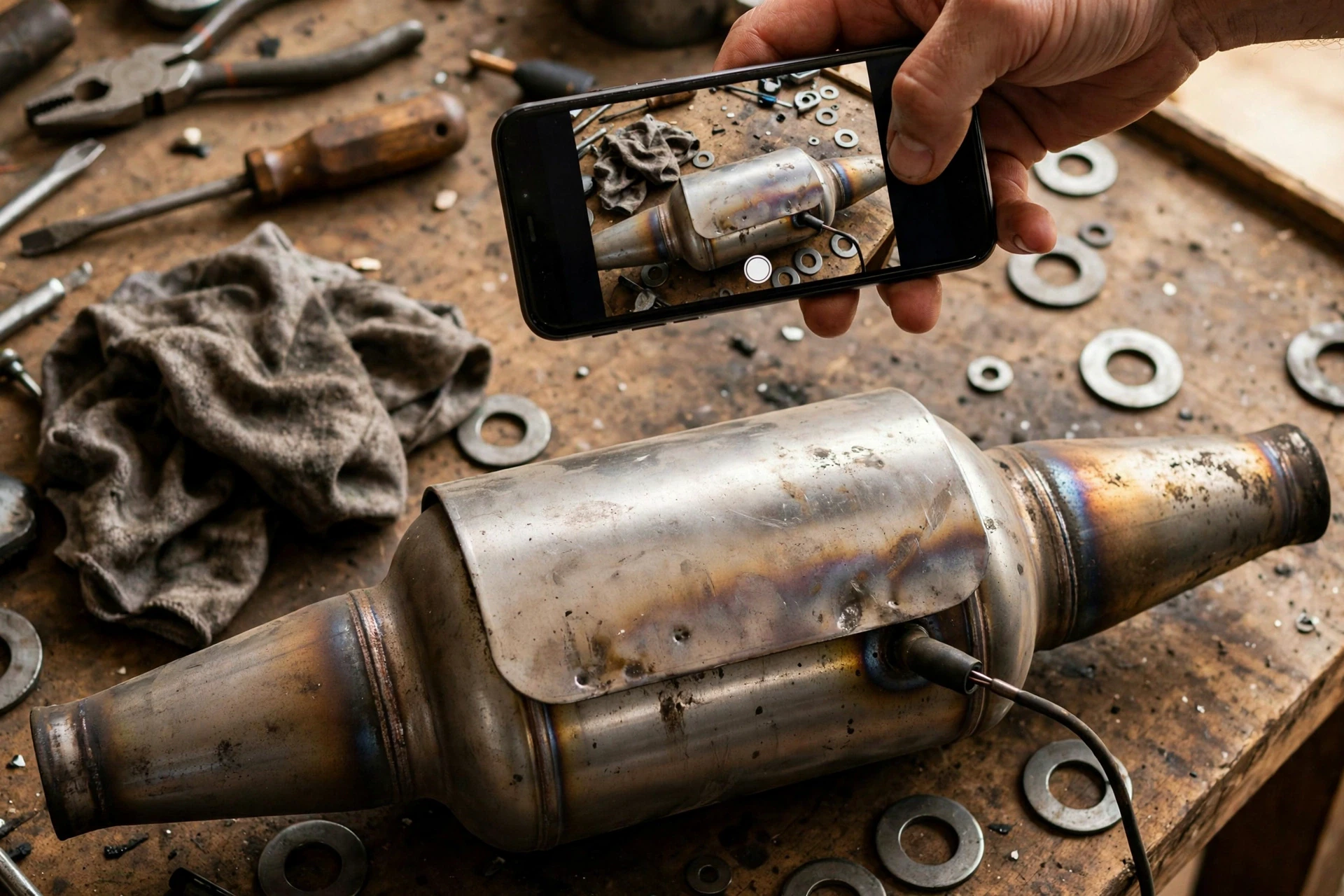
You do not need to bring your converters anywhere to learn what they are worth. With RK-Baron, the process starts with a photo.
- Take a clear photo of the stamped code on the shell of each unit.
- Send the photos on WhatsApp or through the quote form on the site.
- Receive an indicative price per reference, based on the market of the day.
For garages with many units, a short list with photos of each code is the fastest route. When a code cannot be read, photos of the whole unit from several angles still help the team identify it.
Why prices are indicative
Because the market moves every day, any price is linked to a date. The final price is confirmed when the lot is received and checked. Units that turn out to be different from the photo, or with missing substrate, are reassessed openly.
Pickup and payment
Once you accept the offer, pickup is organised according to your location and the size of the lot. Garages across Belgium and in neighbouring countries can arrange a collection rather than transporting the parts themselves.
After the lot has been checked, payment is made on the terms agreed with you. A written record of the references and prices helps your accounting and gives a clear trail for each sale.
Make it a regular routine
The garages that earn the most from replaced catalytic converters treat them as a product, not as waste. A few simple habits make a difference:
- assign one person to manage the storage area
- photograph codes as units come in, not months later
- request a valuation when the crate is full or at a fixed interval
- send the codes to RK-Baron as soon as the crate is ready for a clear offer
Regular sales also reduce the risk of storing valuable parts on site for long periods, which matters for security.
Points to watch
Customer ownership
When you replace a part, check how your workshop handles ownership of the old part with the customer. Clear terms on your work order avoid misunderstandings.
Origin of the parts
Specialist buyers ask about the origin of the parts they purchase. Keeping basic records of the vehicles and jobs the units come from is good practice and supports traceability.
Start with your next crate
Your stock of replaced catalytic converters may already represent more value than you expect. Send the code or a photo of each unit on WhatsApp or through the quote form, and RK-Baron will reply with an indicative valuation and pickup options for your garage.