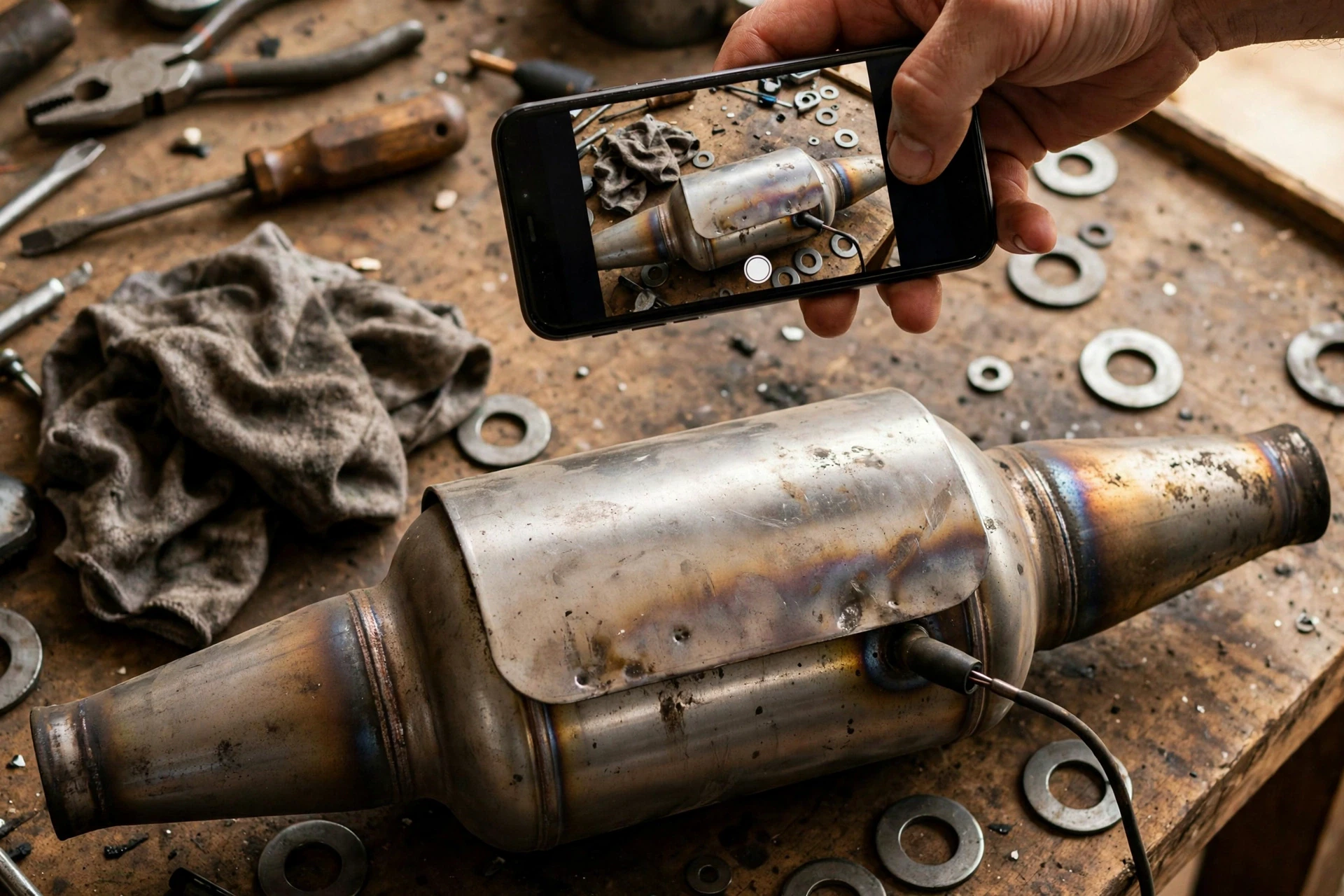
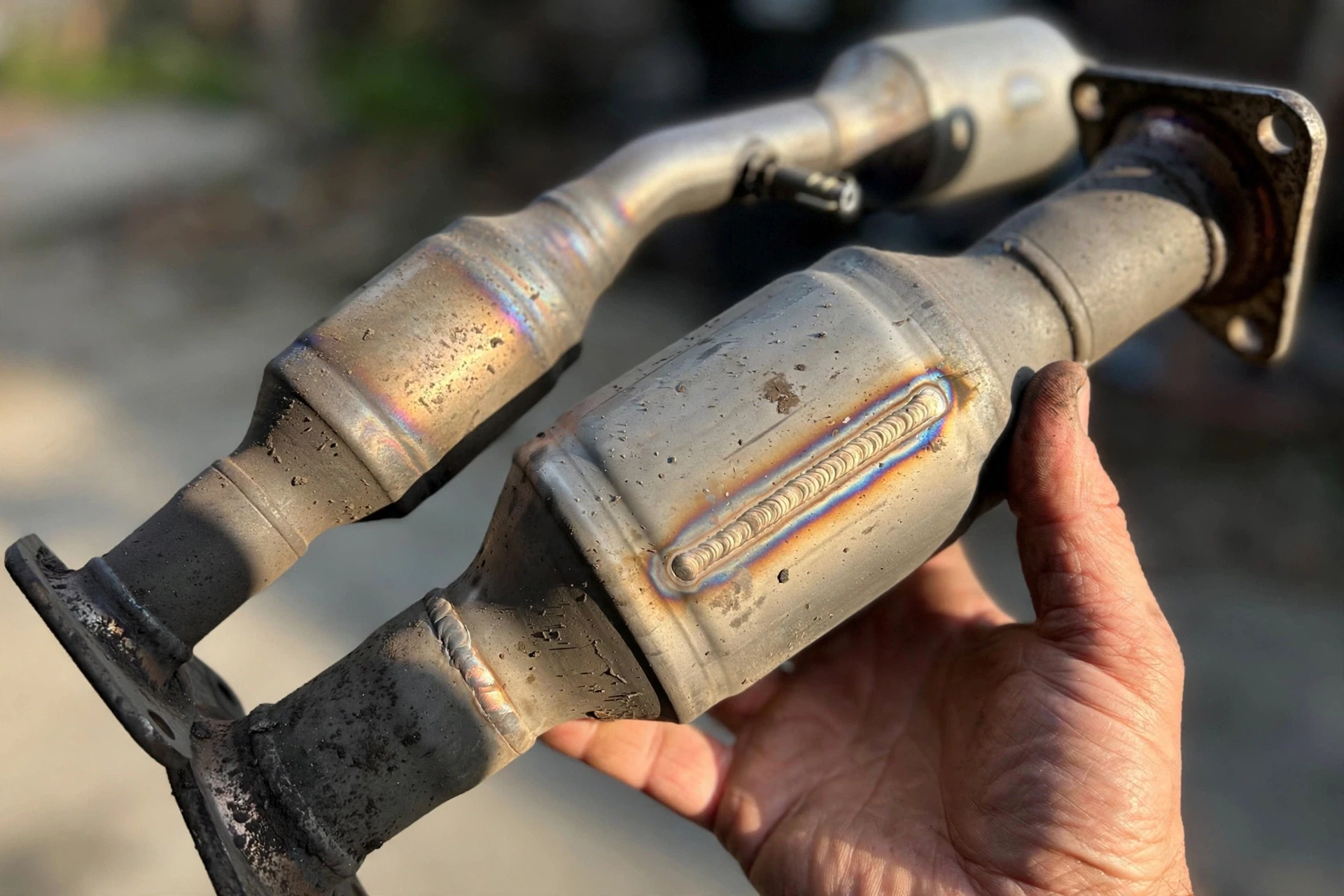
The stamped code is the single most useful piece of information when you want to sell a catalytic converter. It tells a buyer which reference you have and, therefore, which price range to expect. A clear photo of the code often makes the difference between a precise valuation and a cautious estimate.
This guide explains where to look for the code and how to photograph it so that RK-Baron can read it easily, whether you are in Belgium, France, the Netherlands, Germany or elsewhere in Europe.
What the code is
Car manufacturers and their suppliers mark original catalytic converters with an identification code. It may combine letters and numbers, and sometimes includes a brand logo or a part number. The format varies between manufacturers, so there is no single pattern to look for.
Aftermarket replacement converters may carry their own markings, which differ from original equipment codes.
Where to look
On the main body
Start with the flat or slightly curved sides of the converter body, the widest part between the inlet and outlet pipes. Many codes are stamped here.
Under or on the heat shield
Some converters have a thin outer heat shield. The code may be on the shield itself or on the shell underneath. If the shield is loose and comes off easily, look beneath it, but do not cut or force the shell.
Near the welds and ends
On some models the code sits close to the cone where the body narrows into the pipe, or near a weld seam.
Check every side
Turn the converter over and inspect all faces. Codes are sometimes on the side that faced the road and is covered in dirt.
Practical photo tips
A readable photo depends more on preparation and lighting than on an expensive camera. A recent smartphone is enough.
Clean the area
Remove loose dirt, oil and surface rust around the stamp with a brush, a cloth or a mild degreaser. Avoid aggressive grinding, which can erase shallow characters.
Light from the side at a low angle
Stamped characters are small dents in the metal. Light coming straight at them flattens the image. Instead, place a lamp or your phone torch to one side, at a low angle almost parallel to the surface. The shadows inside each character make it stand out. Try light from different sides to see which works best.
Use chalk or talc
This is a simple trick that works well on worn stamps:
- rub white chalk or a little talc over the stamped area
- wipe the surface gently with a flat cloth or your finger
- the powder stays inside the dents, so the characters appear white against the darker metal
Then photograph the stamp again with side lighting.
Take several photos from different angles
One photo is rarely enough. Take:
- a photo showing the whole stamp, with all characters in the frame
- close-ups of each part of the code
- shots from slightly different angles, which can reveal characters hidden by reflection
- one photo of the complete converter for context
Include the whole stamp
Do not crop part of the code. A missing letter or number can point to a different reference. If the stamp is long, take one wide photo and then overlapping close-ups.
Keep it sharp
Tap the screen to focus on the characters, hold the phone steady and avoid digital zoom. Move closer instead. Check each photo on screen before moving on.
What else helps
If you know the vehicle the converter came from, add the make, model and engine to your message. If the converter is damaged, show the ends so the condition of the interior is visible. This information helps RK-Baron identify the unit when the stamp is partly unreadable.
When the code cannot be read
Heavy corrosion or heat damage can make a code impossible to read. In that case:
- send photos of the whole converter from several angles
- include photos of both ends showing the interior
- mention the vehicle details if known
For larger quantities of unidentifiable or crushed material, RK-Baron can value the lot as a whole after checking it on arrival.
Send your photos
Once you have clear photos of the code, send them on WhatsApp or through the quote form. RK-Baron will reply with an indicative valuation based on the exact reference, its condition and the market of the day.