Scrapyards see catalytic converters in every possible condition. Some arrive intact, others have been dented in an accident, rattled loose over years of driving or crushed together with the car body. A common question is whether these damaged units are still worth selling separately.
In most cases, the answer is yes. What matters is not the shape of the shell but how much of the original part remains. This article explains how scrapyards in Belgium, France, the Netherlands and Germany can recover value from broken and crushed catalytic converters with RK-Baron.
What a buyer looks at
A catalytic converter has three main parts:
- the steel shell and pipes
- an insulating mat around the core
- the monolith, a ceramic honeycomb or metallic foil inside the shell
The price of a converter depends on the exact reference of the part, its condition and the market of the day. An empty shell on its own is ordinary steel.
So the key question for a damaged unit is simple: how much of the monolith is still there?
Common damage situations
Cracked but complete monolith
A monolith that is cracked but still inside the shell is usually treated as a complete part. It can be identified by its code and valued much like an intact unit, subject to checking.
Partly broken or loose monolith
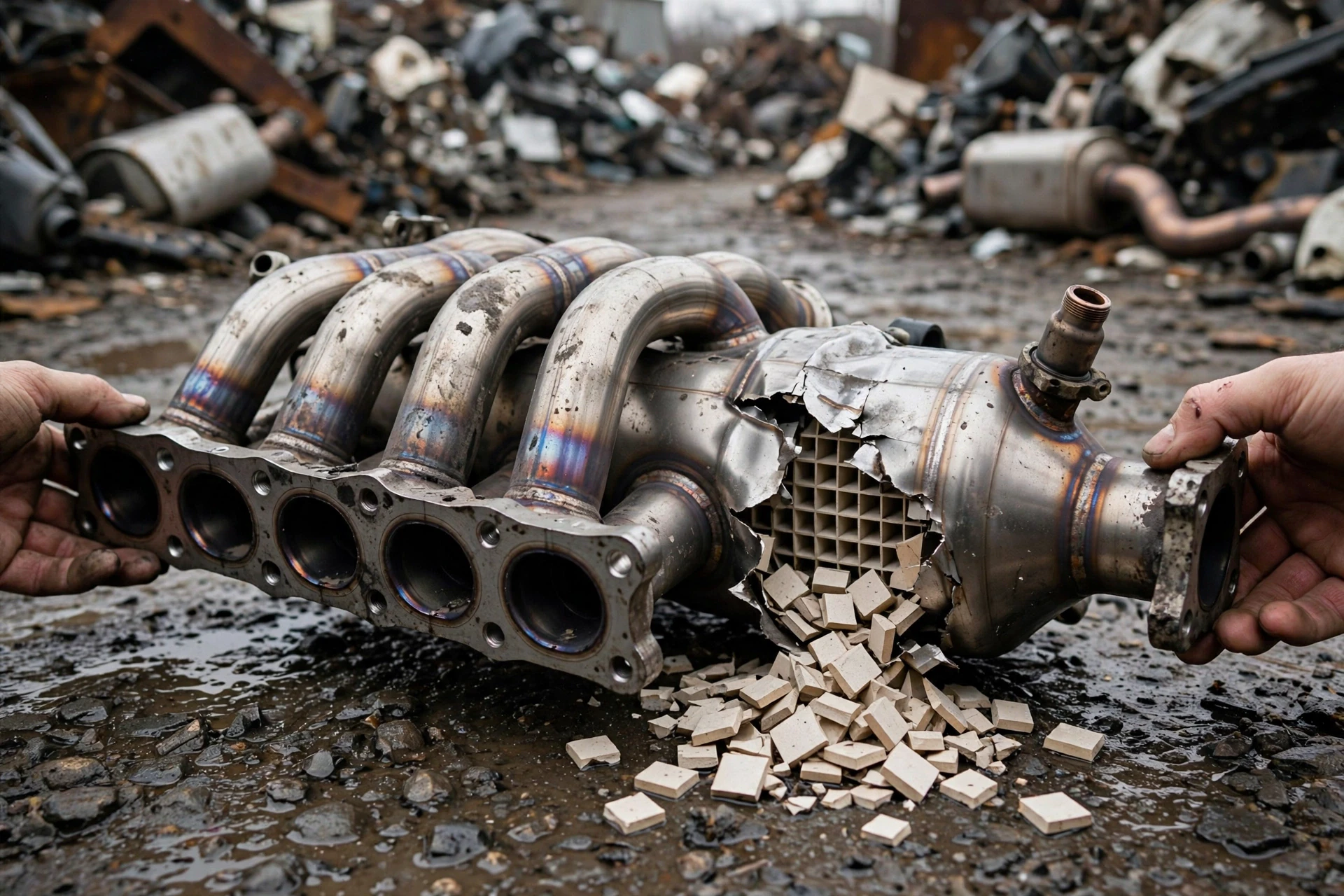
When part of the ceramic has broken away, value is reduced in proportion to what is missing. If the fragments are still in the shell or have been collected, they can be recovered.
Crushed with the vehicle
When a car is flattened, the converter is often crushed too. The ceramic breaks into pieces but stays largely inside the shell. These units can be cut out and the material recovered.
Empty shell
If the monolith is gone completely, the part is no longer a complete converter. Empty shells are best sold as steel scrap.
How to store damaged units
The biggest loss with broken converters is not the damage itself but the material that falls out during handling. A few habits prevent this:
- handle damaged units gently and keep the openings upright where possible
- store them in closed containers or lined crates
- never sweep ceramic dust into general waste
- keep a dedicated bin for fragments and powder
- store everything under cover to keep it dry
Keep categories separate
Do not mix damaged units with intact coded ones. Intact units are valued by reference; crushed material is valued as a separate category. Mixing makes both harder to price fairly.
How RK-Baron values damaged material
Units with a readable code
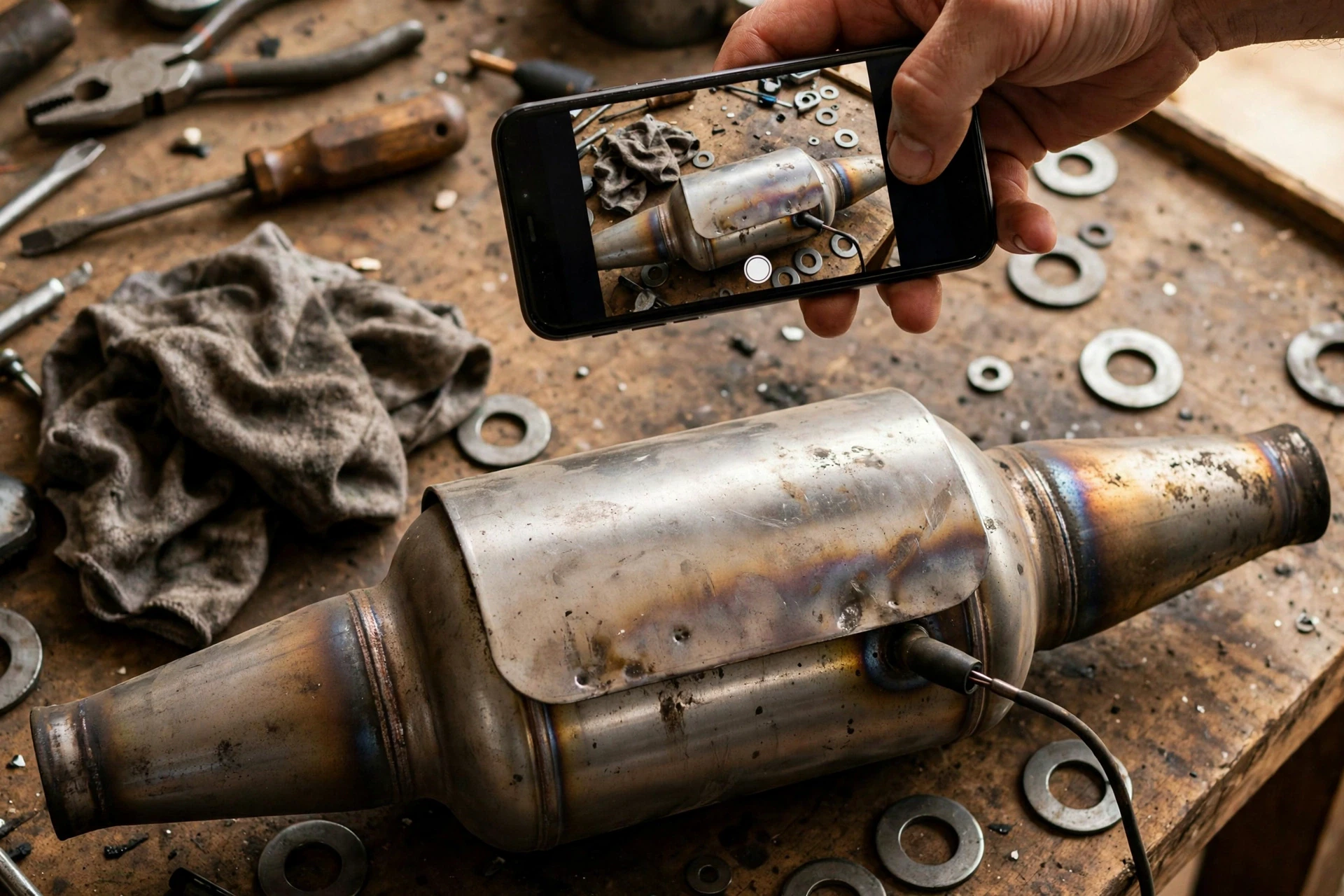
If the stamp is still readable and most of the monolith remains, send a photo of the code and of both ends. The team can assess how complete the interior is.
Crushed and decanned material
For loose monolith pieces, powder and crushed units, the lot is handled as its own category:
- Send photos of the containers and a rough idea of the quantity.
- You receive an indicative price for the category.
- The material is weighed and checked on arrival.
- The final price depends on the type of material, its condition and the market of the day.
This approach keeps the valuation clear and avoids an average guess across mixed material.
Things that reduce value
Some factors lower what damaged material can fetch:
- moisture, which adds weight but no value
- contamination with soil, rust flakes or other debris
- mixing with non-catalytic ceramics or insulation in large amounts
- aftermarket monoliths, which are generally priced lower than original parts
Keeping material clean and dry helps ensure the check on arrival reflects what you actually sent. A short note on where each container came from, and roughly how many units it holds, also makes the check on arrival quicker for everyone involved.
Pickup and payment
Once a lot is ready, RK-Baron arranges pickup according to your location in Belgium or elsewhere in Europe. After weighing and checking, payment is made on the terms agreed with you, with a written breakdown of categories, weights and prices.
Do not write off damaged converters
A broken or crushed catalytic converter is rarely worthless. As long as the material is kept together, it can be checked and paid for. Send photos of your damaged units or crushed lot on WhatsApp or through the quote form, and RK-Baron will reply with the best way to value them.